

One of the most common misunderstandings we see: the treating doctor has written a letter saying the patient is fit to fly, so the family assumes the airline will let them board. Often it won't, not because the doctor is wrong, but because the airline hasn't been asked in the way it needs to be asked. The way it needs to be asked is a form called the MEDIF, and understanding how it works is the difference between a patient who gets home on schedule and one who is turned away at check-in.
Why airlines need to know
A commercial aircraft is a demanding environment for a sick passenger. The cabin is pressurized to the equivalent of 6,000 to 8,000 feet, so there is less oxygen available than at sea level. The air is dry, the passenger is largely immobile for hours, there is no physician on board, and the nearest hospital may be an ocean away. If someone deteriorates in flight, the captain may have to divert, which is disruptive and expensive for everyone else on board. Airlines therefore reserve the right to assess any passenger whose condition might affect their own safety or the flight's, and most operate a medical department to do exactly that.
What a MEDIF is
MEDIF stands for Medical Information Form. It is a standard form developed by IATA, the airline industry's trade association, and used in one variation or another by most carriers worldwide. It has two parts.
- Part 1 is completed by the passenger, or by whoever is arranging the trip. It covers the itinerary and the practical needs: wheelchair, stretcher, in-flight oxygen and the flow rate, medical equipment, an escort, extra seats.
- Part 2 is completed and signed by the treating physician. It asks for the diagnosis, the date of the event or surgery, the prognosis, whether the condition is contagious, current medications, whether the patient can sit upright for take-off and landing, whether they can manage their own needs in flight, and whether oxygen is required and at what flow.
The completed form goes to the airline's medical department, usually through its special-assistance desk or a travel agent with access to it. A doctor there reviews it and either clears the passenger, clears them with conditions, asks for more information, or declines. That decision, not the treating doctor's letter, is what the check-in agent and the cabin crew go by.
The outcome is filed against the booking using standard codes: MEDA for a medical case, OXYG for oxygen, STCR for a stretcher, and the wheelchair codes WCHR, WCHS and WCHC, which distinguish a passenger who can walk to the seat from one who has to be lifted into it. Getting these right matters, because they drive what actually happens at the airport.
Who needs clearance, and who doesn't
A passenger does not need a MEDIF simply because they are elderly, use a wheelchair, or have a stable long-term condition. Wheelchair assistance is booked as a service request, not a medical clearance. Airlines generally want a MEDIF when:
- The passenger has recently been in hospital, had surgery, or suffered an acute event such as a heart attack, stroke or collapsed lung
- In-flight oxygen, a stretcher, or medical equipment is needed
- The condition is unstable, or could reasonably be expected to worsen during the flight
- The condition may be contagious
- The passenger needs a medical escort, or cannot manage their own needs during the flight
- There is an acute psychiatric condition that requires supervision
Frequent travelers with a stable condition that would otherwise trigger the form every time can apply to some airlines for a FREMEC, a frequent traveler's medical card, which records their condition and needs and replaces the MEDIF for a set period.
The waiting periods airlines commonly apply
Airline medical departments work from published guidance, including IATA's own medical manual and guidelines from bodies such as the Aerospace Medical Association and the British Thoracic Society. The ranges below are the ones we see most often. Every airline has its own table, and its medical department can shorten or lengthen a wait based on the detail in Part 2.
- Uncomplicated heart attack: around 7 to 10 days, sooner for low-risk cases with good test results
- Heart bypass or other chest surgery: around 10 days, once the risk from trapped air in the chest has passed
- Abdominal surgery: around 10 days for open procedures, less for keyhole surgery
- Stroke: commonly 10 days to two weeks once the patient is stable, with shorter waits possible when the picture is clear
- Collapsed lung (pneumothorax): one to two weeks after imaging confirms it has fully resolved
- Fresh plaster cast: a cast fitted within the last 48 hours is usually required to be split for flights over two hours, because trapped air expands at altitude
- Severe anemia: a hemoglobin below roughly 8.5 g/dL usually needs clearance and may need oxygen
- Infectious disease: not accepted while contagious
The point is not the number. It is that a specific, well-documented Part 2, with dates, test results and a clear statement of stability, gets a specific answer. A vague one gets a request for more information, and the clock keeps running.
Oxygen: the question airlines care about most
Because cabin pressure reduces the oxygen available, a passenger who is only just managing at sea level may not manage at altitude. Healthy passengers see their oxygen saturation fall to around 90 to 93 percent during a flight without noticing. A patient with lung disease, heart failure or anemia can fall much further. The widely used British Thoracic Society guidance says that a sea-level saturation of 95 percent or above on room air normally needs no oxygen, that 92 to 95 percent with risk factors calls for further testing, and that anything below 92 percent means oxygen in flight.
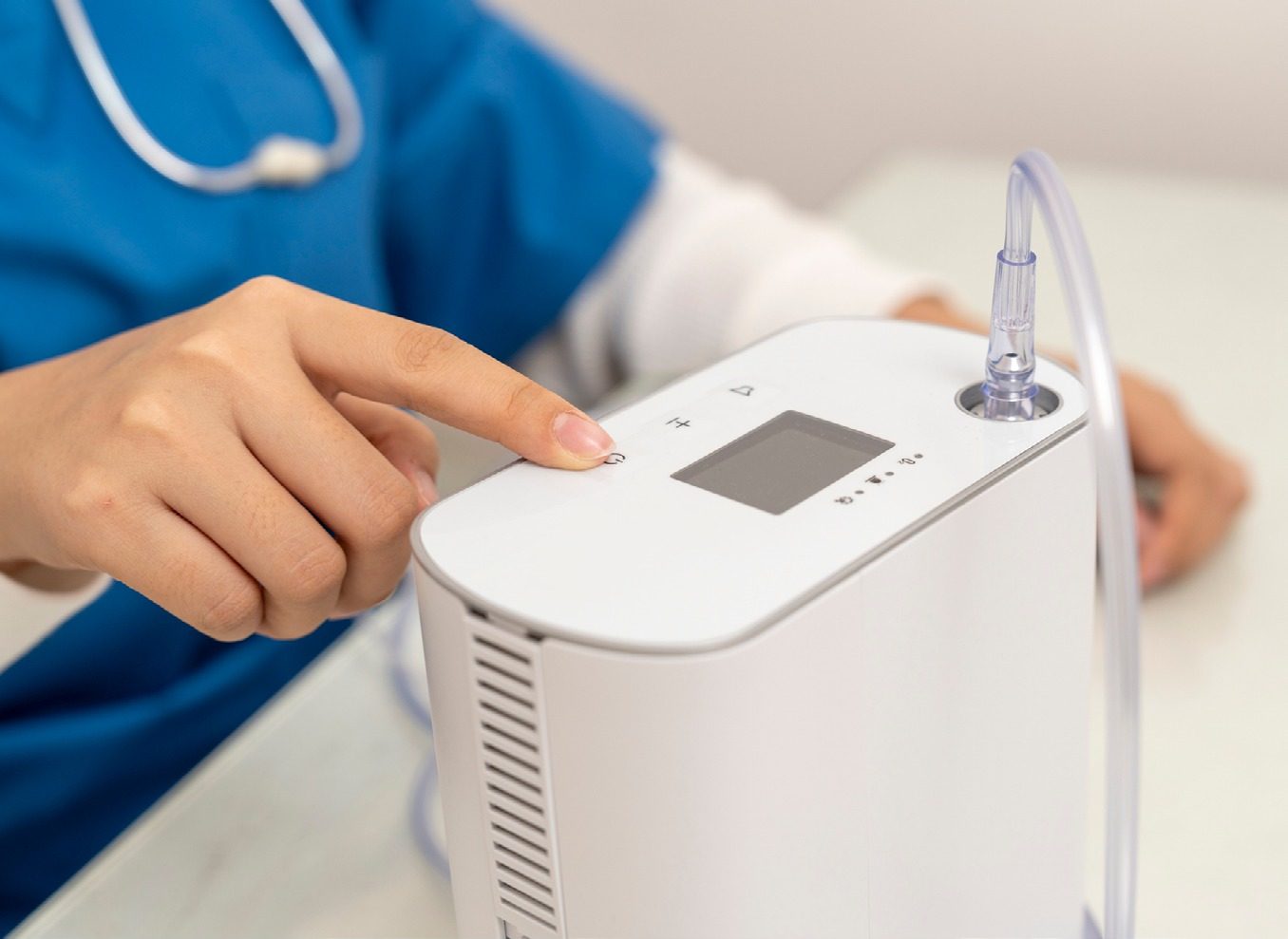
How that oxygen is supplied has to be settled before the ticket is bought. Airline-supplied oxygen is offered by fewer carriers every year, is charged for, and must be booked well ahead; a request can also simply be declined. The alternative is a portable oxygen concentrator (POC). US airlines must accept approved POC models, but the passenger has to bring enough battery for 150 percent of the flight's maximum duration, and lithium batteries are subject to dangerous-goods rules that are enforced at security, not at the medical desk. Compressed oxygen cylinders are generally not permitted as personal carry-on.
In our Australia case study, both things went wrong at once: a correctly filed request for airline oxygen was declined, and the POC batteries were confiscated in transit. The mission succeeded because the escort physician had assessed the patient at the bedside, knew the real oxygen requirement, and rebuilt the itinerary around it.
Stretchers and escorts
A stretcher request always requires a MEDIF, and it needs far more lead time than a seated passenger, because the airline has to block and physically remove a row of seats and confirm the installation with its engineering and medical teams. Most carriers want a week or more; some routes and aircraft cannot take a stretcher at all.
The airline can also make a medical escort a condition of carriage: it will accept the patient only if a qualified clinician travels with them and takes responsibility for their care in flight. This is exactly what a commercial medical escort is for. The escort's name and credentials go on the MEDIF, and an airline medical department is typically far more comfortable clearing a borderline patient when it knows a flight nurse, physician or critical-care paramedic will be in the next seat.
How CME handles clearance
Clearance is part of every case we run, and it starts before the form. Our clinical team assesses the patient's fitness to fly first, at the bedside where possible, and decides what the airline should be asked for: seated or stretcher, oxygen and at what flow, which equipment, which level of escort. Then we prepare Part 1, work with the treating physician so that Part 2 says what the airline needs to see, and submit it to the carrier's medical desk through Fly CME, our IATA-accredited in-house travel agency, which also holds the seats while the review runs.
If the airline comes back with questions, we answer them promptly. If it declines, we move to the next option: a different carrier, a stretcher, a short delay for the patient to stabilize, or, for the small number of patients who genuinely need it, an air ambulance. And if our own assessment says the patient is not yet fit to fly, we say so, whatever the airline might accept.
A checklist for families and case managers
If you are arranging a flight for a patient, having the following ready will save days:
- The discharge summary or a current clinical summary, with the diagnosis and the dates of any surgery or acute event
- The current medication list
- Oxygen saturation on room air at rest, and whether the patient uses oxygen at home and at what flow
- Mobility: whether the patient can walk, transfer to a seat, and sit upright for take-off and landing
- Any medical equipment that has to travel, including its batteries
- Whether the condition could be contagious
- The treating physician's contact details, so Part 2 can be completed and any questions answered
- Passport and visa requirements for the patient and the escort
- Where the patient is going: home, or a named hospital, rehab or nursing facility that has agreed to admit them
Fit to fly is a decision, not a form
The MEDIF is the airline's way of asking a question, and a good answer gets patients home. But it is only a snapshot. Patients change between the day the doctor signs Part 2 and the morning of the flight, and a clinician who has examined the patient that morning will always know more than the form does. That is why we treat the airline's clearance as the minimum standard, and our own assessment as the one that decides whether the patient boards.

About the author
Blake Yturralde
Chief Executive Officer, Commercial Medical Escorts
Blake Yturralde is the Chief Executive Officer of Commercial Medical Escorts, which has provided medical escort services to the travel insurance and travel assistance industries for over twenty years. He leads the company's global operations and clinical governance, supporting patients who need medical attention while traveling and maintaining CME's EURAMI-accredited escort teams.
Meet the CME team →